Beyond the boundaries - Highlights from the SECAS symposium at the 2025 SEAFWA conference
For more than 14 years, the SECAS partnership has brought together a broad coalition to work at landscape scales while respecting each partner’s mission, priorities, and decision-making authority. October has always marked a special time for our partnership. We host our annual symposium at the Southeast Association of Fish and Wildlife Agencies conference (even through federal government shutdowns), release the newest update to the Southeast Conservation Blueprint (a little later than planned this year), and most importantly, ask partners how we can continue building a connected network of lands and waters together. This year felt especially significant. Many partners, especially Dr. Paul Armsworth and Cari Furiness, stepped up to help facilitate the symposium and capture the excellent discussions and ideas that were shared when SECAS staff couldn’t be there. I’m not sure it’s possible to express our gratitude and how we felt like it embodied the strength and resilience of our partnership. Thank you.
2025 also marks a year where many states and territories submitted updated Wildlife Action Plans (SWAPs). Updated every 10 years, these plans blend science, expert knowledge, and partnership to guide conservation for Species of Greatest Conservation Need and can serve as roadmaps for conservation nationwide. SECAS staff worked with many of our state and territorial partners to help standardize some elements of the plans, like using consistent regional information, helping identify Conservation Opportunity Areas, and considering future change to habitats. Through this work, we saw firsthand how intensive the process of developing these plans is. It felt right that this year’s symposium celebrated the accomplishments of submitting the third SWAP revisions since 2005 and explored how SECAS can help promote these plans, rally the broader conservation community around implementation, and expand their use.
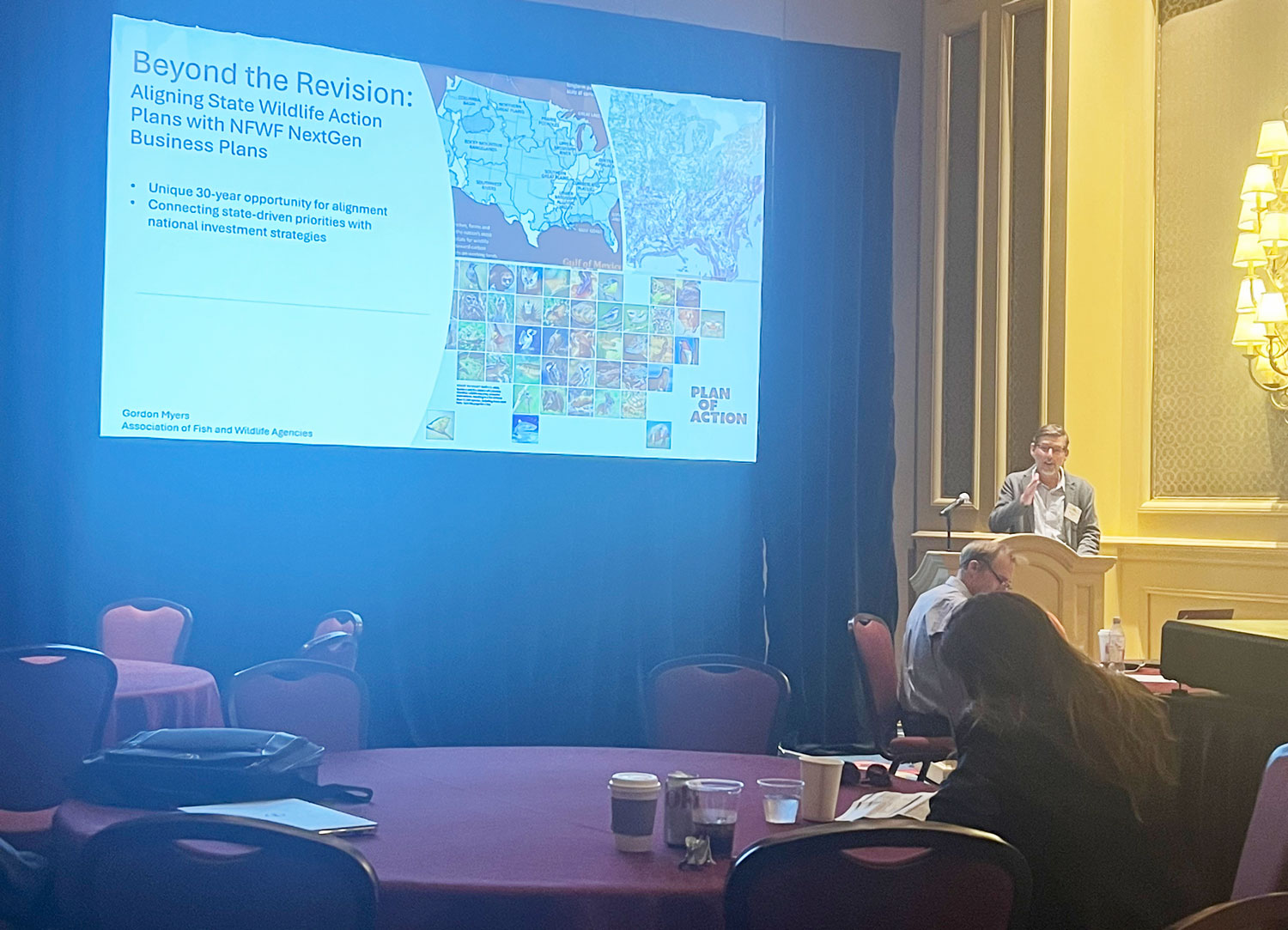
The symposium featured two parts: presentations showing how regional information strengthens state conservation planning, and discussions focused on how SWAPs can be applied in practice. Shannon Deaton (NC Wildlife Resources Commission), Kevin Lowry (GA Department of Natural Resources), and Gordon Myers (Association of Fish and Wildlife Agencies) highlighted the value of regional datasets, like the plant and animal Regional Species of Greatest Conservation Need lists and the Southeast Blueprint, in supporting collaborative action while ensuring state priorities remain central. Gordon Myers’ talk also illustrated how SECAS can work with funders like the National Fish and Wildlife Foundation as they update their Next Generation Business Plans, guiding investments toward measurable, long-term conservation goals while reinforcing state-identified priorities.
Dr. Paul Armsworth (University of Tennessee and the Southeast Climate Adaptation Science Center consortium) offered a research perspective and described a multi-year effort that translated the available data and science around changing weather patterns and future conditions. Dr. Armsworth, Dr. Hailey Shanovich, and others worked hard to translate science on changing weather patterns into information states could use to assess potential habitat shifts and impacts to priority species—work that directly informed many SWAP revisions.
After presentations, people attending the symposium discussed ideas that really centered on how, now that many SWAP revisions are wrapping up, we can: better align priorities across boundaries; translate SWAPs into actionable tools to support restoration and recovery, especially in the wake of natural disasters like Hurricane Helene; and promote SWAPs to wider audiences and make them more accessible to help build a broader conservation network. SECAS is uniquely positioned to integrate additional interests along with state priorities that also include resources and aspects of the landscape that are important to communities and the wider conservation community.
Across the discussions, there was agreement that SWAPs have enormous potential to not only guide conservation action at local and national scales, but also to support restoration and resilience after natural disasters like Hurricane Helene. Participants also returned frequently to a persistent challenge: how to better promote SWAPs so the full conservation community knows about them and understands how to use them. Some of this includes promoting what some states are already doing, like Georgia’s online SWAP viewer, which enhances storytelling and usability; Arkansas’ biennial meetings that bring NGOs, researchers, and practitioners together to co-set two-year project priorities or “hot lists”; and Tennessee’s recent public biodiversity summit that drew 600 attendees.
There’s so much we can learn from each other. As a forum for collaboration, SECAS can play an important role in elevating the great work behind these plans and helping connect plans to action. For SWAPs to guide more conservation decisions, they must be visible, easy to access and understand, and part of our workflows. Another major theme was the need to bring more partners into implementation by promoting SWAPs with local communities, private landowners, industry, and students—as well as eliciting their feedback. Ideas ranged from connecting youth conservation programs directly to SWAP content, publicly celebrating accomplishments, incorporating Traditional Ecological Knowledge and local expertise, and hosting statewide or territorial SWAP gatherings like those emerging in the U.S. Virgin Islands.
Across presentations and discussions, the emerging message is that the Southeast is moving towards connected conservation. The SWAPs and the Southeast Blueprint are not just planning tools, but are evolving as the backbone of regional coordination, disaster resilience, community engagement, and shared storytelling. In short, when partners and communities align around shared data and shared priorities, the Southeast gains a more coherent, actionable, and resilient conservation strategy ready for today’s challenges and tomorrow’s opportunities.